UNORTHODOX ARCHAEOLOGY: thinking outside the box (trench)
Explore unorthodox archaeology with our curated reading list—from Hapgood's *Maps of the Ancient Sea Kings* to Gimbutas's Old Europe, dive into history's biggest questions and think outside the trench.

Book
The Origin Map
by Thomas G. Brophy
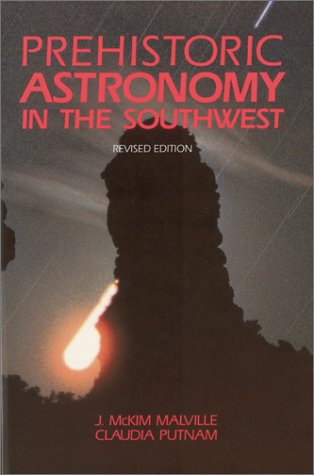
On a desolate plain in the Egyptian Sahara desert, west of Aswan, there is a very remote prehistoric site called Nabta Playa. There, a recently discovered complex of extremely ancient man-made megalithic structures have baffled the archaeologists who excavated them. An insight into the meaning and use of the megaliths led to a step-by-step sequence of discoveries, verified by measure and calculation, revealing that the megalithic architecture at Nabta Playa is a unified and detailed astrophysical map of truly astonishing accuracy, with no less than staggering implications. Written for the educated general reader, with technical appendices, the discovery of how to decipher the system of megalithic structures is reported with gripping clarity.


Book
The Little Ice Age
by Brian Fagan
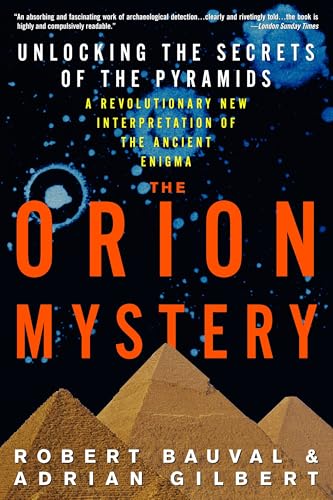
From renowned archeologist Brian Fagan, the classic history of how climate change transformed Europe and the world The Little Ice Age tells the story of the turbulent, unpredictable, and often very cold years of modern European history, revealing how the 500-year cold snap that began in the fourteenth century affected historical events and what it means for today's global warming. Renowned archaeologist Brian Fagan shows how the increasing cold influenced familiar events, from Norse exploration to the settlement of North America to the Industrial Revolution. This is a fascinating book for anyone interested in history, climate, and how they interact.



Book
The Goddesses and Gods of Old Europe, 6500-3500 BC, Myths and Cult Images
by Marija Gimbutas
Through study of sculpture, vases, and other cult objects from southeastern Europe, Gimbutas sketches the village culture that evolved there before it was overwhelmed by the patriarchal Indo-Europeans. The goddess incarnating the creative principle as Source and Giver of All, fertility images, mythical animals, and other artifacts are analyzed for their mythic and social significance in this beautifully illustrated study.


Book
Maps of the Ancient Sea Kings
by Charles H. Hapgood
Hapgood utilizes ancient maps as concrete evidence of an advanced worldwide civilization existing many thousands of years before ancient Egypt. Hapgood concluded that these ancient mapmakers were in some ways much more advanced in mapmaking than any people prior to the 18th century. Hapgood believes that they mapped all the continents. This would mean that the Americas were mapped thousands of years before Columbus. Antarctica would have been mapped when its coasts were free of ice. Hapgood supposes that there is evidence that these people must have lived when the Ice Age had not yet ended in the Northern Hemisphere and when Alaska was still connected with Siberia by the Pleistocene, Ice Age 'land bridge'.



Book
Vikings
by William F. Fitzhugh
Replete with color photographs, drawings, and maps of Viking sites, artifacts, and landscapes, this book celebrates and explores the Viking saga from the combined perspectives of history, archaeology, oral tradition, literature, and natural science. The book's contributors chart the spread of marauders and traders in Europe as well as the expansion of farmers and explorers throughout the North Atlantic and into the New World. They show that Norse contacts with Native American groups were more extensive than has previously been believed, but that the outnumbered Europeans never established more than temporary settlements in North America.