Top Ten of Western Philosophers
Explore the top ten Western philosophers and their influential books. Discover timeless ideas from Socrates to Nietzsche in this essential guide to philosophy's greatest minds.

Book
An Enquiry Concerning Human Understanding
by David Hume
Oxford Philosophical Texts Series Editor: John Cottingham The Oxford Philosophical Texts series consists of authoritative teaching editions of canonical texts in the history of philosophy from the ancient world down to modern times. Each volume provides a clear, well laid out text together with a comprehensive introduction by a leading specialist, givingthe student detailed critical guidance on the intellectual context of the work and the structure and philosophical importance of the main arguments. Endnotes are supplied which provide further commentary on the arguments and explain unfamiliar references and terminology, and a full bibliography andindex are also included. The series aims to build up a definitive corpus of key texts in the Western philosophical tradition, which will form a reliable and enduring resource for students and teachers alike. David Hume's aim in writing An Enquiry concerning Human Understanding (1748) was to introduce his philosophy to a European culture in which many educated people read original works of philosophy. He gives an elegant and accessible presentation of strikingly original and challenging views about thelimited powers of human understanding, the attractions of scepticism, the compatibility of free will and determinism, and weaknesses in the foundations of religion. Hume's philosophy was highly controversial in the eighteenth century and remains so today. The text printed in this edition is that of the Clarendon critical edition of Hume's works. A substantial introduction by the editor explains the intellectual background to the work and surveys its main themes. The volume also includes detailed explanatory notes on the text, a glossary of terms, afull list of references, and a section of supplementary readings.

Book
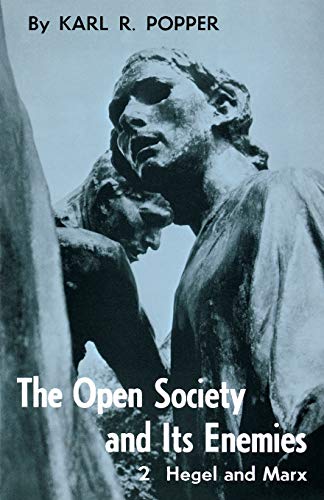
The Open Society and Its Enemies: The spell of Plato
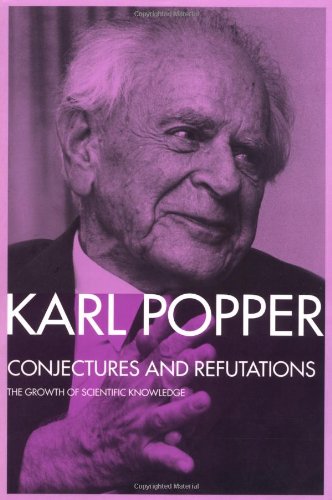
by Karl Raimund Popper
Popper was born in 1902 to a Viennese family of Jewish origin. He taught in Austria until 1937, when he emigrated to New Zealand in anticipation of the Nazi annexation of Austria the following year, and he settled in England in 1949. Before the annexation, Popper had written mainly about the philosophy of science, but from 1938 until the end of the Second World War he focused his energies on political philosophy, seeking to diagnose the intellectual origins of German and Soviet totalitarianism. The Open Society and Its Enemies was the result. In the book, Popper condemned Plato, Marx, and Hegel as "holists" and "historicists"--a holist, according to Popper, believes that individuals are formed entirely by their social groups; historicists believe that social groups evolve according to internal principles that it is the intellectual's task to uncover. Popper, by contrast, held that social affairs are unpredictable, and argued vehemently against social engineering. He also sought to shift the focus of political philosophy away from questions about who ought to rule toward questions about how to minimize the damage done by the powerful. The book was an immediate sensation, and--though it has long been criticized for its portrayals of Plato, Marx, and Hegel--it has remained a landmark on the left and right alike for its defense of freedom and the spirit of critical inquiry.