Non-fiction
Explore our curated list of top non-fiction books across genres, from biographies to self-help. Discover must-read titles for knowledge seekers and avid readers.


Book
The Looming Tower
by Lawrence Wright
NATIONAL BESTSELLER • PULITZER PRIZE WINNER • A “heart-stopping account of the events leading up to 9/11” (The New York Times Book Review), this definitive history explains in gripping detail the growth of Islamic fundamentalism, the rise of al-Qaeda, and the intelligence failures that culminated in the attacks on the World Trade Center. One of the New York Times’s 100 Best Books of the 21st Century In gripping narrative that spans five decades, Lawrence Wright re-creates firsthand the transformation of Osama bin Laden and Ayman al-Zawahiri from incompetent and idealistic soldiers in Afghanistan to leaders of the most successful terrorist group in history. He follows FBI counterterrorism chief John O’Neill as he uncovers the emerging danger from al-Qaeda in the 1990s and struggles to track this new threat. Packed with new information and a deep historical perspective, The Looming Tower is a sweeping, unprecedented history of the long road to September 11.

Book
The Omnivore's Dilemma
by Michael Pollan
"Outstanding . . . a wide-ranging invitation to think through the moral ramifications of our eating habits." —The New Yorker One of the New York Times Book Review's Ten Best Books of the Year and Winner of the James Beard Award Author of This is Your Mind on Plants, How to Change Your Mind and the #1 New York Times Bestseller In Defense of Food and Food Rules What should we have for dinner? Ten years ago, Michael Pollan confronted us with this seemingly simple question and, with The Omnivore’s Dilemma, his brilliant and eye-opening exploration of our food choices, demonstrated that how we answer it today may determine not only our health but our survival as a species. In the years since, Pollan’s revolutionary examination has changed the way Americans think about food. Bringing wide attention to the little-known but vitally important dimensions of food and agriculture in America, Pollan launched a national conversation about what we eat and the profound consequences that even the simplest everyday food choices have on both ourselves and the natural world. Ten years later, The Omnivore’s Dilemma continues to transform the way Americans think about the politics, perils, and pleasures of eating.


Book
The Path to Power
by Robert A. Caro
The Years of Lyndon Johnson is the political biography of our time. No president—no era of American politics—has been so intensively and sharply examined at a time when so many prime witnesses to hitherto untold or misinterpreted facets of a life, a career, and a period of history could still be persuaded to speak. The Path to Power, Book One, reveals in extraordinary detail the genesis of the almost superhuman drive, energy, and urge to power that set LBJ apart. Chronicling the startling early emergence of Johnson’s political genius, it follows him from his Texas boyhood through the years of the Depression in the Texas hill Country to the triumph of his congressional debut in New Deal Washington, to his heartbreaking defeat in his first race for the Senate, and his attainment, nonetheless, of the national power for which he hungered. We see in him, from earliest childhood, a fierce, unquenchable necessity to be first, to win, to dominate—coupled with a limitless capacity for hard, unceasing labor in the service of his own ambition. Caro shows us the big, gangling, awkward young Lyndon—raised in one of the country’s most desperately poor and isolated areas, his education mediocre at best, his pride stung by his father’s slide into failure and financial ruin—lunging for success, moving inexorably toward that ultimate “impossible” goal that he sets for himself years before any friend or enemy suspects what it may be. We watch him, while still at college, instinctively (and ruthlessly) creating the beginnings of the political machine that was to serve him for three decades. We see him employing his extraordinary ability to mesmerize and manipulate powerful older men, to mesmerize (and sometimes almost enslave) useful subordinates. We see him carrying out, before his thirtieth year, his first great political inspiration: tapping-and becoming the political conduit for-the money and influence of the new oil men and contractors who were to grow with him to immense power. We follow, close up, the radical fluctuations of his relationships with the formidable “Mr. Sam” Raybum (who loved him like a son and whom he betrayed) and with FDR himself. And we follow the dramas of his emotional life-the intensities and complications of his relationships with his family, his contemporaries, his girls; his wooing and winning of the shy Lady Bird; his secret love affair, over many years, with the mistress of one of his most ardent and generous supporters . . . Johnson driving his people to the point of exhausted tears, equally merciless with himself . . . Johnson bullying, cajoling, lying, yet inspiring an amazing loyalty . . . Johnson maneuvering to dethrone the unassailable old Jack Garner (then Vice President of the United States) as the New Deal’s “connection” in Texas, and seize the power himself . . . Johnson raging . . . Johnson hugging . . . Johnson bringing light and, indeed, life to the worn Hill Country farmers and their old-at-thirty wives via the district’s first electric lines. We see him at once unscrupulous, admirable, treacherous, devoted. And we see the country that bred him: the harshness and “nauseating loneliness” of the rural life; the tragic panorama of the Depression; the sudden glow of hope at the dawn of the Age of Roosevelt. And always, in the foreground, on the move, LBJ. Here is Lyndon Johnson—his Texas, his Washington, his America—in a book that brings us as close as we have ever been to a true perception of political genius and the American political process.


Book
Nothing to Envy
by Barbara Demick
"Nothing to Envy" follows the lives of six North Koreans over 15 years--a chaotic period that saw the unchallenged rise to power of Kim Jong Il and the devastation of a famine that killed one-fifth of the population.
Book
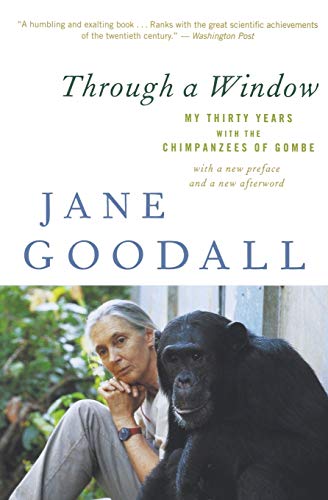
Through a Window
by Jane Goodall
THROUGH A WINDOW is the dramatic saga of thirty years in the life of a community, of birth and death, sex and love, power and war. It reads like a novel, but it is one of the most important scientific works ever published. The community is Gombe, on the shores of Lake Tangganyika, where the principal residents are chimpanzees and one extraordinary woman who is their student, protector, and historian. In her classic In the Shadow of Man, Jane Goodall wrote of her first ten years at Gombe. In Through a Window she brings the story up to the present, painting a much more complete and vivid portrait of our closest relative. We see the community split in two and a brutal war break out. We watch young Figan's relentless rise to power and old Mike's crushing defeat. We learn how one mother rears her children to succeed and another dooms them to failure. We witness horrifying murders, touching moments of affection, joyous births, and wrenching deaths. In short, we see every emotion known to humans stripped to its essence. In the mirror of chimpanzee life, we see ourselves reflected. Perhaps the best book ever written about animal behavior, Through a Window is also essential reading for anyone seeking a better grasp of human behavior.