My 2007 Reading List

Explore the ultimate 2007 reading list featuring literary classics and modern masterpieces, from One Hundred Years of Solitude and Moby-Dick to Freakonomics and The Catcher in the Rye. Dive into a curated collection of fiction, philosophy, and timeless tales by authors like Faulkner, Dostoevsky, and Murakami—the perfect guide for book lovers seeking their next great read.

Freakonomics Rev Ed Cover
Book

Freakonomics Rev Ed

by Steven D. Levitt

Which is more dangerous, a gun or a swimming pool? What do schoolteachers and sumo wrestlers have in common? Why do drug dealers still live with their moms? How much do parents really matter? How did the legalization of abortion affect the rate of violent crime? These may not sound like typical questions for an econo-mist to ask. But Steven D. Levitt is not a typical economist. He is a much-heralded scholar who studies the riddles of everyday life—from cheating and crime to sports and child-rearing—and whose conclusions turn conventional wisdom on its head. Freakonomics is a groundbreaking collaboration between Levitt and Stephen J. Dubner, an award-winning author and journalist. They usually begin with a mountain of data and a simple question. Some of these questions concern life-and-death issues; others have an admittedly freakish quality. Thus the new field of study contained in this book: freakonomics. Through forceful storytelling and wry insight, Levitt and Dubner show that economics is, at root, the study of incentives—how people get what they want, or need, especially when other people want or need the same thing. In Freakonomics, they explore the hidden side of . . . well, everything. The inner workings of a crack gang. The truth about real-estate agents. The myths of campaign finance. The telltale marks of a cheating schoolteacher. The secrets of the Klu Klux Klan. What unites all these stories is a belief that the modern world, despite a great deal of complexity and downright deceit, is not impenetrable, is not unknowable, and—if the right questions are asked—is even more intriguing than we think. All it takes is a new way of looking. Freakonomics establishes this unconventional premise: If morality represents how we would like the world to work, then economics represents how it actually does work. It is true that readers of this book will be armed with enough riddles and stories to last a thousand cocktail parties. But Freakonomics can provide more than that. It will literally redefine the way we view the modern world.
The Things They Carried Cover
Book

The Things They Carried

by Tim O'Brien

One of the first questions people ask about The Things They Carried is this: Is it a novel, or a collection of short stories? The title page refers to the book simply as "a work of fiction," defying the conscientious reader's need to categorize this masterpiece. It is both: a collection of interrelated short pieces which ultimately reads with the dramatic force and tension of a novel. Yet each one of the twenty-two short pieces is written with such care, emotional content, and prosaic precision that it could stand on its own. The Things They Carried depicts the men of Alpha Company: Jimmy Cross, Henry Dobbins, Rat Kiley, Mitchell Sanders, Norman Bowker, Kiowa, and of course, the character Tim O'Brien who has survived his tour in Vietnam to become a father and writer at the age of forty-three. They battle the enemy (or maybe more the idea of the enemy), and occasionally each other. In their relationships we see their isolation and loneliness, their rage and fear. They miss their families, their girlfriends and buddies; they miss the lives they left back home. Yet they find sympathy and kindness for strangers (the old man who leads them unscathed through the mine field, the girl who grieves while she dances), and love for each other, because in Vietnam they are the only family they have. We hear the voices of the men and build images upon their dialogue. The way they tell stories about others, we hear them telling stories about themselves. With the creative verve of the greatest fiction and the intimacy of a searing autobiography, The Things They Carried is a testament to the men who risked their lives in America's most controversial war. It is also a mirror held up to the frailty of humanity. Ultimately The Things They Carried and its myriad protagonists call to order the courage, determination, and luck we all need to survive.
The Sound and the Fury Cover
Book

The Sound and the Fury

by William Faulkner

NOBEL PRIZE WINNER • One of the greatest novels of the twentieth century is the story of a family of Southern aristocrats on the brink of personal and financial ruin. • The definitive corrected text, including Faulkner's Appendix One of The Atlantic’s Great American Novels of the Past 100 Years The Sound and the Fury is the tragedy of the Compson family, featuring some of the most memorable characters in literature: beautiful, rebellious Caddy; the manchild Benjy; haunted, neurotic Quentin; Jason, the brutal cynic; and Dilsey, their black servant. Their lives fragmented and harrowed by history and legacy, the character’s voices and actions mesh to create what is arguably Faulkner’s masterpiece and one of the greatest novels of the twentieth century. “I give you the mausoleum of all hope and desire.... I give it to you not that you may remember time, but that you might forget it now and then for a moment and not spend all of your breath trying to conquer it. Because no battle is ever won he said. They are not even fought. The field only reveals to man his own folly and despair, and victory is an illusion of philosophers and fools.” —from The Sound and the Fury
The Electric Kool-aid Acid Test Cover
Book

The Electric Kool-aid Acid Test

by Tom Wolfe

Wolfe details his wild cross-country ride with Ken Kesey and the Merry Pranksters, offering a vivid portrayal of the hippy subculture in its own joyful, psychedelic, excessive, and terrifying colors.
Ulysses Cover
Book

Ulysses

by James Joyce

This revised volume of the acclaimed novel follows the complete unabridged text as corrected in 1961. Set entirely on one day, 16 June 1904, Ulysses follows Leopold Bloom and Stephen Daedalus as they go about their daily business in Dublin. From this starting point, James Joyce constructs a novel of extraordinary imaginative richness and depth. Unique in the history of literature, Ulysses is one of the most important and enjoyable works of the twentieth century. This edition contains the original foreword by the author and the historic court ruling to remove the federal ban. It also contains page references to the first American edition of 1934.
Madame Bovary Cover
Book

Madame Bovary


No summary available.
Pale Fire Cover
Book

Pale Fire

by Vladimir Nabokov

A darkly comic novel of suspense, literary idolatry and one-upmanship, and political intrigue from one of the leading writers of the twentieth century, the acclaimed author of Lolita. "Half-poem, half-prose...a creation of perfect beauty, symmetry, strangeness, originality and moral truth. One of the great works of art of this century." —Mary McCarthy, New York Times bestselling author of The Group An ingeniously constructed parody of detective fiction and learned commentary, Pale Fire offers a cornucopia of deceptive pleasures, at the center of which is a 999-line poem written by the literary genius John Shade just before his death. Surrounding the poem is a foreword and commentary by the demented scholar Charles Kinbote, who interweaves adoring literary analysis with the fantastical tale of an assassin from the land of Zembla in pursuit of a deposed king. Brilliantly constructed and wildly inventive, Vladimir Nabokov's witty novel achieves that rarest of things in literature—perfect tragicomic balance.
If on a Winter's Night a Traveler Cover
Book

If on a Winter's Night a Traveler

by Italo Calvino

Italo Calvino's classic, multifaceted novel about writing and readers.
Molloy, Malone Dies, The Unnamable Cover
Book

Molloy, Malone Dies, The Unnamable

by Samuel Beckett

The first novel of Samuel Beckett's mordant and exhilarating midcentury trilogy introduces us to Molloy, who has been mysteriously incarcerated, and who subsequently escapes to go discover the whereabouts of his mother. In the latter part of this curious masterwork, a certain Jacques Moran is deputized by anonymous authorities to search for the aforementioned Molloy. In the trilogy's second novel, Malone, who might or might not be Molloy himself, addresses us with his ruminations while in the act of dying. The third novel consists of the fragmented monologue–delivered, like the monologues of the previous novels, in a mournful rhetoric that possesses the utmost splendor and beauty–of what might or might not be an armless and legless creature living in an urn outside an eating house. Taken together, these three novels represent the high-water mark of the literary movement we call Modernism. Within their linguistic terrain, where stories are taken up, broken off, and taken up again, where voices rise and crumble and are resurrected, we can discern the essential lineaments of our modern condition, and encounter an awesome vision, tragic yet always compelling and always mysteriously invigorating, of consciousness trapped and struggling inside the boundaries of nature.
The Stranger Cover
Book

The Stranger

by Albert Camus

With the intrigue of a psychological thriller, The Stranger—Camus's masterpiece—gives us the story of an ordinary man unwittingly drawn into a senseless murder on an Algerian beach. With an Introduction by Peter Dunwoodie; translated by Matthew Ward. Behind the subterfuge, Camus explores what he termed "the nakedness of man faced with the absurd" and describes the condition of reckless alienation and spiritual exhaustion that characterized so much of twentieth-century life. “The Stranger is a strikingly modern text and Matthew Ward’s translation will enable readers to appreciate why Camus’s stoical anti-hero and ­devious narrator remains one of the key expressions of a postwar Western malaise, and one of the cleverest exponents of a literature of ambiguity.” –from the Introduction by Peter Dunwoodie First published in 1946; now in translation by Matthew Ward.
Crime and Punishment (Penguin Popular Classics) Cover
Book

Crime and Punishment (Penguin Popular Classics)


No summary available.
Notes from Underground Cover
Book

Notes from Underground

by Fyodor Dostoevsky

Award-winning translators Richard Pevear and Larissa Volokhonsky give us a brilliantly faithful rendition of this classic novel, in all its tragedy and tormented comedy. In this second edition, they have updated their translation in honor of the 200th anniversary of Dostoevsky’s birth. One of the most remarkable characters in literature, the unnamed narrator of Dostoevsky's most revolutionary novel is a former official who has defiantly withdrawn into an underground existence. In full retreat from society, he scrawls a passionate, obsessive, self-contradictory narrative that serves as a devastating attack on social utopianism and an assertion of man’s essentially irrational nature.
The Brothers Karamazov Cover
Book

The Brothers Karamazov

by Fyodor Dostoevsky

Originally published in 1990 by North Point Press.
Waiting for Godot Cover
Book

Waiting for Godot


No summary available.
The Metamorphosis Cover
Book

The Metamorphosis

by Franz Kafka

“When Gregor Samsa woke up one morning from unsettling dreams, he found himself changed in his bed into a monstrous vermin.” With this startling, bizarre, yet surprisingly funny first sentence, Kafka begins his masterpiece, The Metamorphosis. It is the story of a young man who, transformed overnight into a giant beetlelike insect, becomes an object of disgrace to his family, an outsider in his own home, a quintessentially alienated man. A harrowing—though absurdly comic—meditation on human feelings of inadequacy, guilt, and isolation, The Metamorphosis has taken its place as one of the most widely read and influential works of twentieth-century fiction. As W.H. Auden wrote, “Kafka is important to us because his predicament is the predicament of modern man.”
The Fall Cover
Book

The Fall

by Albert Camus

NOBEL PRIZE-WINNING AUTHOR • One of the most widely read novels of all time—from one of the best-known writers of all time—about a lawyer from Paris who brilliantly illuminates the human condition. Elegantly styled, Camus' profoundly disturbing novel of a Parisian lawyer's confessions is a searing study of modern amorality.
Cat's Cradle Cover
Book

Cat's Cradle

by Kurt Vonnegut

“A free-wheeling vehicle . . . an unforgettable ride!”—The New York Times Cat’s Cradle is Kurt Vonnegut’s satirical commentary on modern man and his madness. An apocalyptic tale of this planet’s ultimate fate, it features a midget as the protagonist, a complete, original theology created by a calypso singer, and a vision of the future that is at once blackly fatalistic and hilariously funny. A book that left an indelible mark on an entire generation of readers, Cat’s Cradle is one of the twentieth century’s most important works—and Vonnegut at his very best. “[Vonnegut is] an unimitative and inimitable social satirist.”—Harper’s Magazine “Our finest black-humorist . . . We laugh in self-defense.”—Atlantic Monthly
Nineteen Eighty-four Cover
Book

Nineteen Eighty-four

by George Orwell

Eternal warfare is the price of bleak prosperity in this satire of totalitarian barbarism.
Invisible Man Cover
Book

Invisible Man

by Ralph Ellison

NATIONAL BOOK AWARD WINNER • NATIONAL BESTSELLER • In this deeply compelling novel and epic milestone of American literature, a nameless narrator tells his story from the basement lair of the Invisible Man he imagines himself to be. One of The Atlantic’s Great American Novels of the Past 100 Years He describes growing up in a Black community in the South, attending a Negro college from which he is expelled, moving to New York and becoming the chief spokesman of the Harlem branch of "the Brotherhood," before retreating amid violence and confusion. Originally published in 1952 as the first novel by a then unknown author, it remained on the bestseller list for sixteen weeks and established Ralph Ellison as one of the key writers of the century. The book is a passionate and witty tour de force of style, strongly influenced by T.S. Eliot's The Waste Land, James Joyce, and Dostoevsky.
As I Lay Dying Cover
Book

As I Lay Dying

by William Faulkner

A true 20th-century classic from the Nobel Prize-winning author of The Sound and the Fury: the famed harrowing account of the Bundren family’s odyssey across the Mississippi countryside to bury Addie, their wife and mother. As I Lay Dying is one of the most influential novels in American fiction in structure, style, and drama. Narrated in turn by each of the family members, including Addie herself as well as others, the novel ranges in mood from dark comedy to the deepest pathos. “I set out deliberately to write a tour-de-force. Before I ever put pen to paper and set down the first word I knew what the last word would be and almost where the last period would fall.” —William Faulkner on As I Lay Dying This edition reproduces the corrected text of As I Lay Dying as established in 1985 by Noel Polk.
The Catcher in the Rye Cover
Book

The Catcher in the Rye

by J.D. Salinger

J.D. Salinger's classic of adolescent angst is now available for the first time in trade paperback. Holden Caulfield, knowing he is to be expelled from school, decides to leave early. He spends three days in New York City and tells the story of what he did and suffered there.
Hopscotch Cover
Book

Hopscotch

by Julio Cortazar

"Cortazar's masterpiece ... The first great novel of Spanish America" (The Times Literary Supplement) • Winner of the National Book Award for Translation in 1967, translated by Gregory Rabassa Horacio Oliveira is an Argentinian writer who lives in Paris with his mistress, La Maga, surrounded by a loose-knit circle of bohemian friends who call themselves "the Club." A child's death and La Maga's disappearance put an end to his life of empty pleasures and intellectual acrobatics, and prompt Oliveira to return to Buenos Aires, where he works by turns as a salesman, a keeper of a circus cat which can truly count, and an attendant in an insane asylum. Hopscotch is the dazzling, freewheeling account of Oliveira's astonishing adventures.
To the Lighthouse Cover
Book

To the Lighthouse

by Virginia Woolf

The novel that established Virginia Woolf as a leading writer of the twentieth century, To the Lighthouse is made up of three powerfully charged visions into the life of one family living in a summer house off the rocky coast of Scotland. As time winds its way through their lives, the Ramseys face, alone and simultaneously, the greatest of human challenges and its greatest triumph-the human capacity for change. A moving portrait in miniature of family life, it also has profoundly universal implications, giving language to the silent space that separates people and the space that they transgress to reach each other.
A Room of One's Own Cover
Book

A Room of One's Own

by Virginia Woolf

Woolf's celebrated essay based on the thesis that "a woman must have money and a room of her own if she is to write fiction."
One Hundred Years of Solitude Cover
Book

One Hundred Years of Solitude

by Gabriel Garcia Marquez

One Hundred Years of Solitude tells the story of the rise and fall, birth and death of the mythical town of Macondo through the history of the Buendía family. Inventive, amusing, magnetic, sad, and alive with unforgettable men and women -- brimming with truth, compassion, and a lyrical magic that strikes the soul -- this novel is a masterpiece in the art of fiction.
The New York Trilogy Cover
Book

The New York Trilogy

by Paul Auster

The remarkable, acclaimed series of interconnected detective novels City of Glass, Ghosts, and The Locked Room, from New York Times bestselling author Paul Auster. This Penguin Classics Deluxe Edition includes an introduction from author and professor Lucy Sante, as well as a pulp novel-inspired cover from Art Spiegelman, Pulitzer Prize-winning graphic artist of Maus and In the Shadow of No Towers. “Exhilarating . . . a brilliant investigation of the storyteller’s art guided by a writer-detective who’s never satisfied with just the facts.”—The Philadelphia Inquirer City of Glass: As a result of a strange phone call in the middle of the night, Quinn, a writer of detective stories, becomes enmeshed in a case more puzzling than any he might have written. Ghosts: Blue, a student of Brown, has been hired by White to spy on Black. From a window of a rented room on Orange Street, Blue keeps watch on his subject, who is across the street, staring out of his own window. The Locked Room: Fanshawe has disappeared, leaving behind his wife and baby and a cache of extraordinary novels, plays, and poems. What happened to him and why is the narrator, Fanshawe’s boyhood friend, lured obsessively into his life? Moving at the breathless pace of a thriller, this is a uniquely stylized trilogy of detective novels that The Washington Post Book World has classified as “post-existential private eye. . . . It’s as if Kafka has gotten hooked on the gumshoe game and penned his own ever-spiraling version.” Penguin Classics is the leading publisher of classic literature in the English-speaking world, representing a global bookshelf of the best works throughout history and across genres and disciplines. Readers trust the series to provide authoritative texts enhanced by introductions and notes by distinguished scholars and contemporary authors, as well as up-to-date translations by award-winning translators.
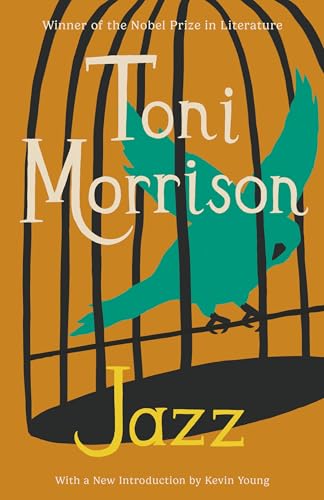
Jazz Cover
Book

Jazz


No summary available.
Sixty Stories Cover
Book

Sixty Stories

by Donald Barthelme

This excellent collection of Donald Barthelme's literary output during the 1960s and 1970s covers the period when the writer came to prominence--producing the stories, satires, parodies, and other formal experiments that altered fiction as we know it--and wrote many of the most beautiful sentences in the English language. Due to the unfortunate discontinuance of many of Barthelme's titles, 60 Stories now stands as one of the broadest overviews of his work, containing selections from eight previously published books, as well as a number of other short works that had been otherwise uncollected.
Hard-Boiled Wonderland and the End of the World Cover
Book

Hard-Boiled Wonderland and the End of the World

by Haruki Murakami

From the #1 New York Times bestselling author of 1Q84 and The Wind-Up Bird Chronicle comes a relentlessly inventive novel that dives deep into the very nature of consciousness. “Fantastical, mysterious, and funny . . . a fantasy world that might have been penned by Franz Kafka.”—The Philadelphia Inquirer Across two parallel narratives, Murakami draws readers into a mind-bending universe in which Lauren Bacall, Bob Dylan, a split-brained data processor, a deranged scientist, his shockingly undemure granddaughter, and various thugs, librarians, and subterranean monsters collide to dazzling effect. What emerges is a hyperkinetic novel that is at once hilariously funny and a deeply serious meditation on the nature and uses of the mind.
Moby-Dick Cover
Book

Moby-Dick

by Herman Melville

Nominated as one of America’s best-loved novels by PBS’s The Great American Read First published in 1851, Herman Melville’s masterpiece is, in Elizabeth Hardwick’s words, “the greatest novel in American literature.” The saga of Captain Ahab and his monomaniacal pursuit of the white whale remains a peerless adventure story but one full of mythic grandeur, poetic majesty, and symbolic power. Filtered through the consciousness of the novel’s narrator, Ishmael, Moby-Dick draws us into a universe full of fascinating characters and stories, from the noble cannibal Queequeg to the natural history of whales, while reaching existential depths that excite debate and contemplation to this day.
Gone with the wind Cover
Book

Gone with the wind


No summary available.
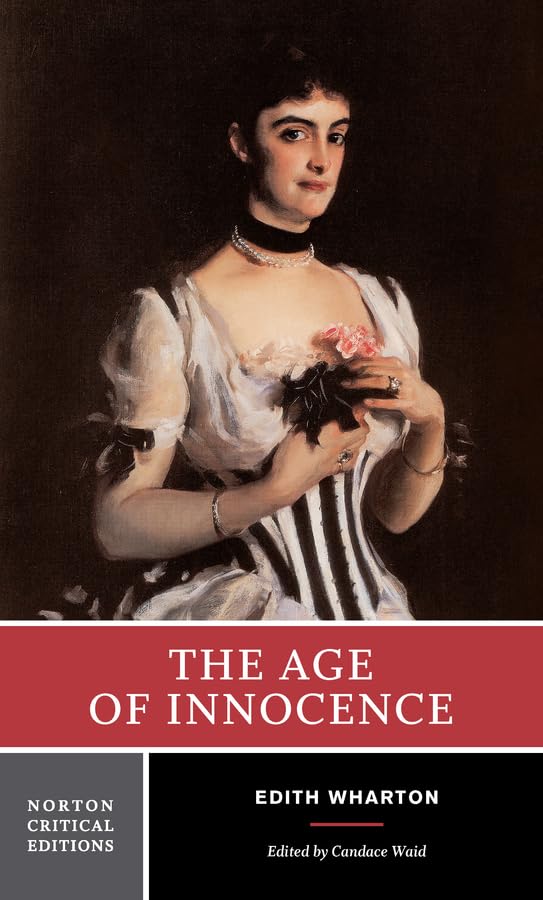
The age of innocence Cover
Book

The age of innocence


No summary available.
The Wind in the Willows Cover
Book

The Wind in the Willows


No summary available.
War and Peace Cover
Book

War and Peace

by Leo Tolstoy

Introduction by A. N. Wilson • Nominated as one of America’s best-loved novels by PBS’s The Great American Read Often called the greatest novel ever written, War and Peace is at once an epic of the Napoleonic Wars, a philosophical study, and a celebration of the Russian spirit. Tolstoy’s genius is seen clearly in the multitude of characters in this massive chronicle—all of them fully realized and equally memorable. Out of this complex narrative emerges a profound examination of the individual’s place in the historical process, one that makes it clear why Thomas Mann praised Tolstoy for his Homeric powers and placed War and Peace in the same category as the Iliad: “To read him . . . is to find one’ s way home . . . to everything within us that is fundamental and sane.”
Little Women Cover
Book

Little Women

by Louisa May Alcott

In New England during the Civil War, four sisters experience joys and hardships together.
Watership Down Cover
Book

Watership Down

by Richard Adams

WINNER of the Emmy Award for Outstanding Special Class Animated Program Now a Netflix animated miniseries starring James McAvoy, Nicholas Hoult, and Oscar and Grammy award-winner Sir Ben Kingsley. A worldwide bestseller for more than forty years, Watership Down is the compelling tale of a band of wild rabbits struggling to hold onto their place in the world—“a classic yarn of discovery and struggle” (The New York Times). Richard Adams’s Watership Down is a timeless classic and one of the most beloved novels of all time. Set in the Hampshire Downs in Southern England, an idyllic rural landscape, this stirring tale of “suspense, hot pursuit, and derring-do” (Chicago Tribune) follows a band of rabbits in flight from the incursion of man and the destruction of their home. Led by a stouthearted pair of brothers, they travel forth from their native Sandleford warren through harrowing trials to a mysterious promised land and a more perfect society. “A marvelous story of rebellion, exile, and survival” (Sunday Telegraph) this is an unforgettable literary classic for all ages.
The Count of Monte Cristo Cover
Book

The Count of Monte Cristo

by Alexandre Dumas

Translated with an Introduction by Robin Buss