Middle East
Discover essential books on the Middle East, from Thomas E. Ricks' Fiasco and the 9/11 Commission Report to Bernard Lewis' What Went Wrong?—expert history and analysis on U.S. foreign policy, intelligence, and conflict.

Book
Fiasco
by Thomas E. Ricks
"Drawing on the exclusive cooperation of an extraordinary number of American military personnel, including more than one hundred senior officers, and access to more than thirty thousand pages of official documents, many of them never before made public, Thomas E. Ricks has written the definitive account of the American military's tragic experience in Iraq."--BOOK JACKET.

Book
Imperial Hubris
by Michael Scheuer
According to the author, the greatest danger for Americans confronting the Islamist threat is to believe--at the urging of U.S. leaders--that Muslims attack us for what we are and what we think rather than for what we do.

Book
What Went Wrong?
by Bernard Lewis
For centuries, the world of Islam was in the forefront of human achievement -- the foremost military and economic power in the world, the leader in the arts and sciences of civilization. Christian Europe was seen as an outer darkness of barbarism and unbelief from which there was nothing to learn or to fear. And then everything changed. The West won victory after victory, first on the battlefield and then in the marketplace. In this elegantly written volume, Bernard Lewis, a renowned authority an Islamic affairs, examines the anguished reaction of the Islamic world as it tried to make sense of how it had been overtaken, overshadowed, and dominated by the West. In a fascinating portrait of a culture in turmoil, Lewis shows how the Middle East turned its attention to understanding European weaponry, industry, government, education, and culture. He also describes how some Middle Easterners fastened blame on a series of scapegoats, while others asked not "Who did this to us?" but rather "Where did we go wrong?" With a new Afterword that addresses September 11 and its aftermath, What Went Wrong? is an urgent, accessible book that no one who is concerned with contemporary affairs will want to miss.


Book
Sleeping with the Devil
by Robert Baer
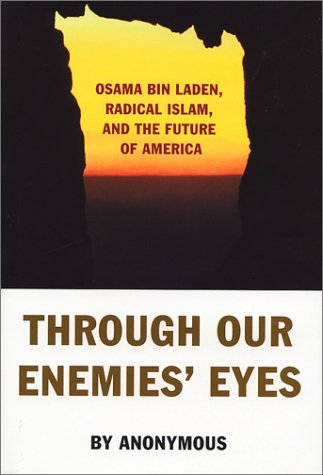
“Saudi Arabia is more and more an irrational state—a place that spawns global terrorism even as it succumbs to an ancient and deeply seated isolationism, a kingdom led by a royal family that can’t get out of the way of its own greed. Is this the fulcrum we want the global economy to balance on?” In his explosive New York Times bestseller,See No Evil, former CIA operative Robert Baer exposed how Washington politics drastically compromised the CIA’s efforts to fight global terrorism. Now in his powerful new book, Sleeping with the Devil, Baer turns his attention to Saudi Arabia, revealing how our government’s cynical relationship with our Middle Eastern ally and America’s dependence on Saudi oil make us increasingly vulnerable to economic disaster and put us at risk for further acts of terrorism. For decades, the United States and Saudi Arabia have been locked in a “harmony of interests.” America counted on the Saudis for cheap oil, political stability in the Middle East, and lucrative business relationships for the United States, while providing a voracious market for the kingdom’s vast oil reserves. With money and oil flowing freely between Washington and Riyadh, the United States has felt secure in its relationship with the Saudis and the ruling Al Sa’ud family. But the rot at the core of our “friendship” with the Saudis was dramatically revealed when it became apparent that fifteen of the nineteen September 11 hijackers proved to be Saudi citizens. InSleeping with the Devil, Baer documents with chilling clarity how our addiction to cheap oil and Saudi petrodollars caused us to turn a blind eye to the Al Sa’ud’s culture of bribery, its abysmal human rights record, and its financial support of fundamentalist Islamic groups that have been directly linked to international acts of terror, including those against the United States. Drawing on his experience as a field operative who was on the ground in the Middle East for much of his twenty years with the agency, as well as the large network of sources he has cultivated in the region and in the U.S. intelligence community, Baer vividly portrays our decades-old relationship with the increasingly dysfunctional and corrupt Al Sa’ud family, the fierce anti-Western sentiment that is sweeping the kingdom, and the desperate link between the two. In hopes of saving its own neck, the royal family has been shoveling money as fast as it can to mosque schools that preach hatred of America and to militant fundamentalist groups—an end game just waiting to play out. Baer not only reveals the outrageous excesses of a Saudi royal family completely out of touch with the people of its kingdom, he also takes readers on a highly personal search for the deeper roots of modern terrorism, a journey that returns time again and again to Saudi Arabia: to the Wahhabis, the powerful Islamic sect that rules the Saudi street; to the Taliban and al Qaeda, both of which Saudi Arabia helped to underwrite; and to the Muslim Brotherhood, one of the most active and effective terrorist groups in existence, which the Al Sa’ud have sheltered and funded. The money and arms that we send to Saudi Arabia are, in effect, being used to cut our own throat, Baer writes, but America might have only itself to blame. So long as we continue to encourage the highly volatile Saudi state to bank our oil under its sand—and so long as we continue to grab at the Al Sa’ud’s money—we are laying the groundwork for a potential global economic catastrophe.


Book
Against All Enemies
by Richard A. Clarke
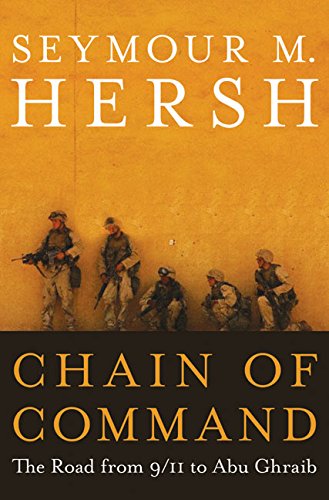
Richard Clarke has been one of America's foremost experts on counterterrorism measures for more than two decades. Here he tells the disturbing truth about the war on terror.

Book
The 9/11 Commission Report: Final Report of the National Commission on Terrorist Attacks Upon the United States (Authorized Edition)
by National Commission on Terrorist Attacks upon the United States
The eagerly awaited release of The 9/11 Commission Report has caused an avalanche of press coverage, but nearly all of the media commentary has omitted one important attribute of this instant bestseller: its readability. For once, our government has produced a report designed for the public that it purports to serve. By comparison, the Starr Commission Report was a confusing hodgepodge cobbled together for lawyer clones, and the Warren Commission Report resembled a hastily constructed mountain of data. By contrast, The 9/11 Commission Report is a model of narrative clarity. Reading it, one gains a better sense of every stage and dimension of these truly terrifying events; from the rise of Bin Laden and Al Qaeda to the collapse of the World Trade Center and its aftermath. Like a full-throttled detective story thrust into real life, it renders the near misses and muffed opportunities that enabled the plot to reach fruition. With sensationalizing or overgeneralizing, the report s authors have given us a document that illuminates the planning and possible countermeasures to these terrible acts. Every American should read this book: After all, we are its target audience and its sponsors. R. N. Wilson