Mean Books
Discover the Mean Books collection—a curated list of 12 essential fiction, philosophy, and psychology titles, from Cervantes' Don Quixote and Dostoevsky's The Brothers Karamazov to Musil's The Man Without Qualities. Explore works by Kafka, Borges, and Hume in this masterful reading list for deep thinkers.


Book
The Man Without Qualities, Vol. 1
by Robert Musil
Set in Vienna on the eve of World War I, this great novel of ideas tells the story of Ulrich, ex-soldier and scientist, seducer and skeptic, who finds himself drafted into the grandiose plans for the 70th jubilee of the Emperor Franz Josef. This new translation--published in two elegant volumes--is the first to present Musil's complete text, including material that remained unpublished during his lifetime.

Book
The Man Without Qualities, Vol. 2
by Robert Musil
"Musil belongs in the company of Joyce, Proust, Kafka, and Svevo. . . . (This translation) is a literay and intellectual event of singular importance."--New Republic.

Book
The Decameron
by Giovanni Boccaccio
Translated with an Introduction and Notes by G. H. McWilliam

Book
Don Quixote
by Miguel de Cervantes
Edith Grossman's definitive English translation of the Spanish masterpiece. Widely regarded as the world's first modern novel, and one of the funniest and most tragic books ever written, Don Quixote chronicles the famous picaresque adventures of the noble knight-errant Don Quixote of La Mancha and his faithful squire, Sancho Panza, as they travel through sixteenth-century Spain. Unless you read Spanish, you've never read Don Quixote. "Though there have been many valuable English translations of Don Quixote, I would commend Edith Grossman's version for the extraordinarily high quality of her prose. The Knight and Sancho are so eloquently rendered by Grossman that the vitality of their characterization is more clearly conveyed than ever before. There is also an astonishing contextualization of Don Quixote and Sancho in Grossman's translation that I believe has not been achieved before. The spiritual atmosphere of a Spain already in steep decline can be felt throughout, thanks to her heightened quality of diction. Grossman might be called the Glenn Gould of translators, because she, too, articulates every note. Reading her amazing mode of finding equivalents in English for Cervantes's darkening vision is an entrance into a further understanding of why this great book contains within itself all the novels that have followed in its sublime wake." From the Introduction by Harold Bloom Miguel de Cervantes was born on September 29, 1547, in Alcala de Henares, Spain. At twenty-three he enlisted in the Spanish militia and in 1571 fought against the Turks in the battle of Lepanto, where a gunshot wound permanently crippled his left hand. He spent four more years at sea and then another five as a slave after being captured by Barbary pirates. Ransomed by his family, he returned to Madrid but his disability hampered him; it was in debtor's prison that he began to write Don Quixote. Cervantes wrote many other works, including poems and plays, but he remains best known as the author of Don Quixote. He died on April 23, 1616.

Book
Collected Fictions
by Jorge Luis Borges
For the first time in English, all the fiction by the writer who has been called “the greatest Spanish-language writer of our century” collected in a single volume “An event, and cause for celebration.”—The New York Times A Penguin Classics Deluxe Edition with flaps and deckle-edged paper For some fifty years, in intriguing and ingenious fictions that reimagined the very form of the short story—from his 1935 debut with A Universal History of Iniquity through his immensely influential collections Ficciones and The Aleph, the enigmatic prose poems of The Maker, up to his final work in the 1980s, Shakespeare’s Memory—Jorge Luis Borges returned again and again to his celebrated themes: dreams, duels, labyrinths, mirrors, infinite libraries, the manipulations of chance, gauchos, knife fighters, tigers, and the elusive nature of identity itself. Playfully experimenting with ostensibly subliterary genres, he took the detective story and turned it into metaphysics; he took fantasy writing and made it, with its questioning and reinventing of everyday reality, central to the craft of fiction; he took the literary essay and put it to use reviewing wholly imaginary books. Bringing together for the first time in English all of Borges’s magical stories, and all of them newly rendered into English in brilliant translations by Andrew Hurley, Collected Fictions is the perfect one-volume compendium for all who have long loved Borges, and a superb introduction to the master’s work for all who have yet to discover this singular genius. For more than seventy-five years, Penguin has been the leading publisher of classic literature in the English-speaking world. With more than 2,000 titles, Penguin Classics represents a global bookshelf of the best works throughout history and across genres and disciplines. Readers trust the series to provide authoritative texts enhanced by introductions and notes by distinguished scholars and contemporary authors, as well as up-to-date translations by award-winning translators.


Book
The Good Soldier
by Ford Madox Ford
`The only novel of mine that I considered...at all to count'. Ford's study of the complex social and sexual relationship between an Edwardian English and American couple is narrated in such a seemingly haphazard way that it has perplexed and delighted readers since its publication in 1915. Despite its catalogue of death, insanity, and despair, this `Tale of Passion' has many comic moments, and has inspired the work of several distinguished writers, including Graham Greene. This is the only annotated student edition available. - ;`The only novel of mine that I considered...at all to count'. Ford's study of the complex social and sexual relationship between an Edwardian English and American couple is narrated in such a seemingly haphazard way that it has perplexed and delighted readers since its publication in 1915. Despite its catalogue of death, insanity, and despair, this `Tale of Passion' has many comic moments, and has inspired the work of several distinguished writers, including Graham Greene. This is the only annotated student edition available. -

Book
Crowds and Power
by Elias Canetti
Crowds and Power is a revolutionary work in which Elias Canetti finds a new way of looking at human history and psychology. Breathtaking in its range and erudition, it explores Shiite festivals and the English Civil war, the finger exercises of monkeys and the effects of inflation in Weimar Germany. In this study of the interplay of crowds, Canetti offers one of the most profound and startling portraits of the human condition.

Book
An Enquiry Concerning Human Understanding
by David Hume
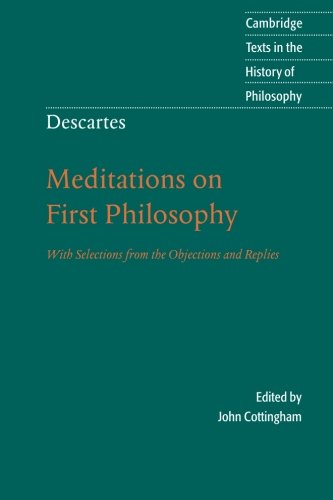
Oxford Philosophical Texts Series Editor: John Cottingham The Oxford Philosophical Texts series consists of authoritative teaching editions of canonical texts in the history of philosophy from the ancient world down to modern times. Each volume provides a clear, well laid out text together with a comprehensive introduction by a leading specialist, givingthe student detailed critical guidance on the intellectual context of the work and the structure and philosophical importance of the main arguments. Endnotes are supplied which provide further commentary on the arguments and explain unfamiliar references and terminology, and a full bibliography andindex are also included. The series aims to build up a definitive corpus of key texts in the Western philosophical tradition, which will form a reliable and enduring resource for students and teachers alike. David Hume's aim in writing An Enquiry concerning Human Understanding (1748) was to introduce his philosophy to a European culture in which many educated people read original works of philosophy. He gives an elegant and accessible presentation of strikingly original and challenging views about thelimited powers of human understanding, the attractions of scepticism, the compatibility of free will and determinism, and weaknesses in the foundations of religion. Hume's philosophy was highly controversial in the eighteenth century and remains so today. The text printed in this edition is that of the Clarendon critical edition of Hume's works. A substantial introduction by the editor explains the intellectual background to the work and surveys its main themes. The volume also includes detailed explanatory notes on the text, a glossary of terms, afull list of references, and a section of supplementary readings.

Book
The Complete Stories
by Franz Kafka
The complete stories of one of the greatest writers of the twentieth century, the author of The Metamorphosis and The Trial. “An important book, valuable in itself and absolutely fascinating. The stories are dreamlike, allegorical, symbolic, parabolic, grotesque, ritualistic, nasty, lucent, extremely personal, ghoulishly detached, exquisitely comic, numinous, and prophetic.” —The New York Times The Complete Stories brings together all of Kafka’s stories, from the classic tales such as “The Metamorphosis,” “In the Penal Colony,” and “A Hunger Artist” to shorter pieces and fragments that Max Brod, Kafka’s literary executor, released after Kafka’s death. With the exception of his three novels, the whole of Kafka’s narrative work is included in this volume. “[Kafka] spoke for millions in their new unease; a century after his birth, he seems the last holy writer, and the supreme fabulist of modern man’s cosmic predicament.” —from the Foreword by John Updike

Book
Jacques the Fatalist and His Master
by Denis Diderot
'Your Jacques is a tasteless mishmash of things that happen, some of them true, others made up, written without style and served up like a dog's breakfast.' Jacques the Fatalist is Diderot's answer to the problem of existence. If human beings are determined by their genes and their environment, how can they claim to be free to want or do anything? Where are Jacques and his Master going? Are they simply occupying space, living mechanically until they die, believing erroneously that they are in charge of their Destiny? Diderot intervenes to cheat our expectations of what fiction should be and do, and behaves like a provocative, ironic and unfailingly entertaining master of revels who finally show why Fate is not to be equated with doom. In the introduction to this brilliant new translation, David Coward explains the philosophical basis of Diderot's fascination with Fate and shows why Jacques the Fatalist pioneers techniques of fiction which, two centuries on, novelists still regard as experimental.

Book
Bouvard and Pecuchet
by Gustave Flaubert
Bouvard and Pécuchet are two Chaplinesque copy-clerks who meet on a park bench in Paris. Following an unexpected inheritance, they decide to give up their jobs and explore the world of ideas. In this, his last novel, unfinished on his death in 1880, Flaubert attempted to encompass his lifelong preoccupation with bourgeois stupidity and his disgust at the banalities of intellectual life in France. Into it he poured all his love of detail, his delight in the life of the mind, his despair of human nature, and his pleasure in passionate friendship. The result is “a kind of encyclopedia made into farce,” wholly grotesque and wholly original, in the spirit of Gargantua and Pantagruel, Don Quixote or Ulysses.