Lit 259
Explore Lit 259's curated reading list featuring literary classics by Stephen Crane, Hemingway, Faulkner, Henry James, and Fitzgerald—essential fiction for book lovers.

Book
Great Short Works of Stephen Crane
by Stephen Crane
The collected short work of an American master, including The Red Badge of Courage and Maggie: A Girl of the Streets. Stephen Crane died at the age of 28 in Germany. In his short life, he produced stories that are among the most enduring in the history of American ficiton. The Red Badge of Courage manages to capture both the realistic grit and the grand hallucinations of soldiers at war. Maggie: A Girl on the Streets reflects the range of Crane's ability to invest the most tragic and ordinary lives with great insight. James Colvert writes in the introduction to this volume: "Here we find once again the major elements of Crane's art: the egotism of the hero, the indifference of nature, the irony of the narrator ... Crane is concerned with the moral responsibility of the individual ... (and) moral capability depends upon the ability to see through the illusions wrought by pride and conceit—the ability to see ourselves clearly and truly." Great Short Works of Stephen Crane Includes : The Red Badge of Courage; Maggie: A Girl of the Streets; The Monster. Stories: An Experiment in Misery; A Mystery of Heroism; An Episode of War; The Upturned Face; The Open Boat; The Pace of Youth; The Bride Comes to Yellow Sky; The Blue Hotel.

Book
The Turn of the Screw
by Henry James
Widely recognized as one of literature's most gripping ghost stories, this classic tale of moral degradation concerns the sinister transformation of two innocent children into flagrant liars and hypocrites. The story begins when a governess arrives at an English country estate to look after Miles, aged ten, and Flora, eight. At first, everything appears normal but then events gradually begin to weave a spell of psychological terror. One night a ghost appears before the governess. It is the dead lover of Miss Jessel, the former governess. Later, the ghost of Miss Jessel herself appears before the governess and the little girl. Moreover, both the governess and the housekeeper suspect that the two spirits have appeared to the boy in private. The children, however, adamantly refuse to acknowledge the presence of the two spirits, in spite of indications that there is some sort of evil communication going on between the children and the ghosts. Without resorting to clattering chains, demonic noises, and other melodramatic techniques, this elegantly told tale succeeds in creating an atmosphere of tingling suspense and unspoken horror matched by few other books in the genre. Known for his probing psychological novels dealing with the upper classes, James in this story tried his hand at the occult — and created a masterpiece of the supernatural that has frightened and delighted readers for nearly a century.
Book
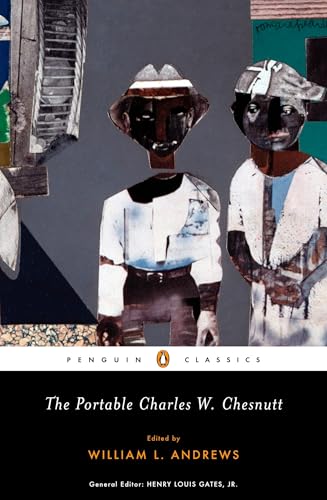
The Portable Charles W. Chesnutt (Penguin Classics)
by Chesnutt, Charles W.
No summary available.

Book
In Our Time
by Ernest Hemingway
THIS COLLECTION OF SHORT STORIES AND VIGNETTES MARKED ERNEST HEMINGWAY'S AMERICAN DEBUT AND MADE HIM FAMOUS When In Our Time was published in 1925, it was praised by Ford Madox Ford, John Dos Passos, and F. Scott Fitzgerald for its simple and precise use of language to convey a wide range of complex emotions, and it earned Hemingway a place beside Sherwood Anderson and Gertrude Stein among the most promising American writers of that period. In Our Time contains several early Hemingway classics, including the famous Nick Adams stories "Indian Camp," "The Doctor and the Doctor's Wife," "The Three Day Blow," and "The Battler," and introduces readers to the hallmarks of the Hemingway style: a lean, tough prose -- enlivened by an car for the colloquial and an eye for the realistic that suggests, through the simplest of statements, a sense of moral value and a clarity of heart. Now recognized as one of the most original short story collections in twentieth-century literature, In Our Time provides a key to Hemingway's later works.

Book
Absalom, Absalom!
by William Faulkner
NOBEL PRIZE WINNER • Family drama and the legacy of slavery haunt this epic tale of an enigmatic stranger in Jefferson, Mississippi—from one of the most acclaimed writers of the twentieth century. “Read, read, read. Read everything—trash, classics, good and bad, and see how they do it. Just like a carpenter who works as an apprentice and studies the master. Read! You’ll absorb it. Then write. If it is good, you’ll find out. If it’s not, throw it out the window.” —William Faulkner Absalom, Absalom! is Faulkner’s epic tale of Thomas Sutpen, a man who comes to the South in the early 1830s to wrest his mansion out of the muddy bottoms of the north Mississippi wilderness. He was a man, Faulkner said, “who wanted sons and the sons destroyed him.”