Hermeneutics: Practical Theology & Social Critique
Discover essential books on hermeneutics, practical theology, and social critique. Explore works by Stiglitz, Huntington, and Friedman on globalization, conflict, and cultural analysis.
Book
Towards Justice and Virtue: A Constructive Account of Practical Reasoning
No summary available.








Book
Globalization and Its Discontents
by Joseph E. Stiglitz
Rarely do we get such an insider's analysis of the major institutions of globalization as in this penetrating book.


Book
The Lexus and the Olive Tree
by Thomas L. Friedman
From one of our most perceptive commentators and winner of the National Book Award, a comprehensive look at the new world of globalization, the international system that, more than anything else, is shaping world affairs today. As the Foreign Affairs columnist forThe New York Times, Thomas L. Friedman has traveled the globe, interviewing people from all walks of contemporary life: Brazilian peasants in the Amazon rain forest, new entrepreneurs in Indonesia, Islamic students in Teheran, and the financial wizards on Wall Street and in Silicon Valley. Now Friedman has drawn on his years on the road to produce an engrossing and original look at globalization. Globalization, he argues, is not just a phenomenon and not just a passing trend. It is the international system that replaced the Cold War system; the new, well-greased, interconnected system: Globalization is the integration of capital, technology, and information across national borders, in a way that is creating a single global market and, to some degreee, a global village. Simply put, one can't possibly understand the morning news or one's own investments without some grasp of the system. Just one example: During the Cold War, we reached for the hot line between the White House and the Kremlin--a symbol that we were all divided but at least the two superpowers were in charge. In the era of globalization, we reach for the Internet--a symbol that we are all connected but nobody is totally in charge. With vivid stories and a set of original terms and concepts, Friedman offers readers remarkable access to his unique understanding of this new world order, and shows us how to see this new system. He dramatizes the conflict of "the Lexus and the olive tree"--the tension between the globalization system and ancient forces of culture, geography, tradition, and community. He also details the powerful backlash that globalization produces among those who feel brutalized by it, and he spells out what we all need to do to keep the system in balance. Finding the proper balance between the Lexus and the olive tree is the great drama of he globalization era, and the ultimate theme of Friedman's challenging, provocative book--essential reading for all who care about how the world really works.

Book
The Clash of Civilizations and the Remaking of World Order
by Samuel P. Huntington
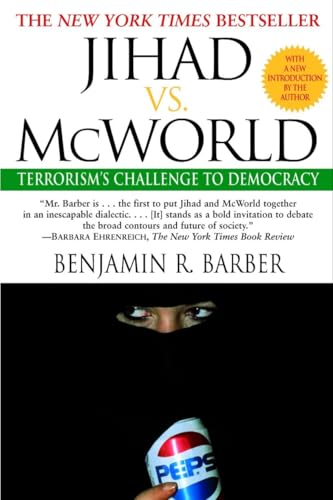
Based on the author's seminal article in Foreign Affairs, Samuel P. Huntington's The Clash of Civilizations and the Remaking of World Order is a provocative and prescient analysis of the state of world politics after the fall of communism. In this incisive work, the renowned political scientist explains how "civilizations" have replaced nations and ideologies as the driving force in global politics today and offers a brilliant analysis of the current climate and future possibilities of our world's volatile political culture.

Book
From Beirut to Jerusalem
by Thomas L. Friedman
Examines Israeli-Palestinian relations, the PLO, Israeli politics, Lebanese factions, news reporting from the Middle East, and other issues of the Middle East.

Book
What Went Wrong?
by Bernard Lewis
For centuries, the world of Islam was in the forefront of human achievement -- the foremost military and economic power in the world, the leader in the arts and sciences of civilization. Christian Europe was seen as an outer darkness of barbarism and unbelief from which there was nothing to learn or to fear. And then everything changed. The West won victory after victory, first on the battlefield and then in the marketplace. In this elegantly written volume, Bernard Lewis, a renowned authority an Islamic affairs, examines the anguished reaction of the Islamic world as it tried to make sense of how it had been overtaken, overshadowed, and dominated by the West. In a fascinating portrait of a culture in turmoil, Lewis shows how the Middle East turned its attention to understanding European weaponry, industry, government, education, and culture. He also describes how some Middle Easterners fastened blame on a series of scapegoats, while others asked not "Who did this to us?" but rather "Where did we go wrong?" With a new Afterword that addresses September 11 and its aftermath, What Went Wrong? is an urgent, accessible book that no one who is concerned with contemporary affairs will want to miss.