Books I loved to read
Discover a curated list of the best books I loved to read, featuring unforgettable fiction from Carl Hiaasen, John Grisham, Kurt Vonnegut, and more.


Book
The Brethren
by John Grisham
In a federal prison, three former judges who call themselves "the brethren" meet in the law library to run a rougher form of justice inside their community and make a some money, but when one of their scams derails, they are forced to confront the world of their own creation.

Book
A Painted House
by John Grisham
Racial tension, a forbidden love affair, and murder are seen through the eyes of a seven-year-old boy in a 1950s Southern cotton-farming community



Book
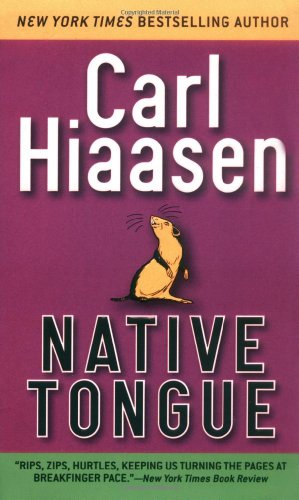
Basket Case
by Carl Hiaasen
Once a hotshot investigative reporter, Jack Tagger now bangs out obituaries for a South Florida daily, "plotting to resurrect my career by yoking my byline to some famous stiff." Jimmy Stoma, the infamous front man of Jimmy and the Slut Puppies, dead in a fishy-smelling scuba "accident" may be just the stiff Jack needs-if only he can figure out what happened. Standing in the way are [among others] an editor who wants Jack to "break her cherry," Stoma's ambitious pop-singer widow, and the soulless, profit-hungry newspaper owner Jack once publicly humiliated. As clues from Stoma's music give Jack Tagger the chance to trade obits for a story that could hit the front page, murder gives his career a new lease on life.

Book
Skin Tight
by Carl Hiaasen
Narrowly escaping an attempt on his life, former Florida state investigator Mick Stranahan wonders who wants him dead and finds suspects in a shaky plastic surgeon, a shady lawyer, and a sensational television host. Reissue.

Book
Double Whammy
by Carl Hiaasen
"Twists and turns with breathtaking speed...You're gonna like this ride." - Washington Post Book World R.J. Decker, star tenant of the local trailer park and neophyte private eye is fishing for a killer. Thanks to a sportsman's scam that's anything but sportsmanlike, there's a body floating in Coon Bog, Florida -- and a lot that's rotten in the murky waters of big-stakes, large-mouth bass tournaments. Here Decker will team up with a half-blind, half-mad hermit with an appetite for road kill; dare to kiss his ex-wife while she's in bed with her new husband; and face deadly TV evangelists, dangerously seductive women, and a pistol-toting redneck with a pit bull on his arm. And here his own life becomes part of the stakes. For while the "double whammy" is the lure, first prize is for the most ingenious murder.

Book
Sick Puppy
by Carl Hiaasen
Independently wealthy eco-terrorist Twilly Spree teaches a flagrant litterbug a lesson--and leaves the offender's precious Range Rover swarming with hungry dung beetles. When he discovers the litterer is one of the most powerful political fixers in Florida, the real Hiaasen-style fun begins.

Book
Perfume
by Patrick Suskind
INTERNATIONAL BESTSELLER • Set in eighteenth-century France, the classic novel that provokes a terrifying examination of what happens when one man’s indulgence in his greatest passion—his sense of smell—leads to murder. In the slums of eighteenth-century France, the infant Jean-Baptiste Grenouille is born with one sublime gift—an absolute sense of smell. As a boy, he lives to decipher the odors of Paris, and apprentices himself to a prominent perfumer who teaches him the ancient art of mixing precious oils and herbs. But Grenouille’s genius is such that he is not satisfied to stop there, and he becomes obsessed with capturing the smells of objects such as brass doorknobs and fresh-cut wood. Then one day he catches a hint of a scent that will drive him on an ever-more-terrifying quest to create the “ultimate perfume”—the scent of a beautiful young virgin. Told with dazzling narrative brilliance, Perfume is a hauntingly powerful tale of murder and sensual depravity. Translated from the German by John E. Woods.




Book
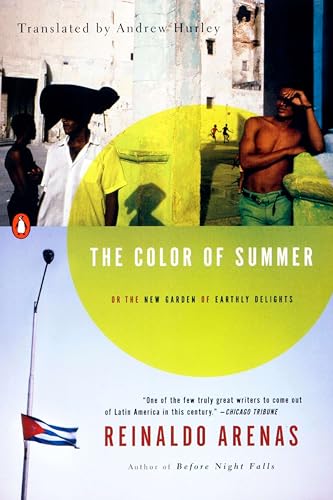
Slaughterhouse-Five
by Kurt Vonnegut
Kurt Vonnegut’s masterpiece, Slaughterhouse-Five is “a desperate, painfully honest attempt to confront the monstrous crimes of the twentieth century” (Time). Selected by the Modern Library as one of the 100 best novels of all time • One of The Atlantic’s Great American Novels of the Past 100 Years Slaughterhouse-Five, an American classic, is one of the world’s great antiwar books. Centering on the infamous World War II firebombing of Dresden, the novel is the result of what Kurt Vonnegut described as a twenty-three-year struggle to write a book about what he had witnessed as an American prisoner of war. It combines historical fiction, science fiction, autobiography, and satire in an account of the life of Billy Pilgrim, a barber’s son turned draftee turned optometrist turned alien abductee. As Vonnegut had, Billy experiences the destruction of Dresden as a POW. Unlike Vonnegut, he experiences time travel, or coming “unstuck in time.” An instant bestseller, Slaughterhouse-Five made Kurt Vonnegut a cult hero in American literature, a reputation that only strengthened over time, despite his being banned and censored by some libraries and schools for content and language. But it was precisely those elements of Vonnegut’s writing—the political edginess, the genre-bending inventiveness, the frank violence, the transgressive wit—that have inspired generations of readers not just to look differently at the world around them but to find the confidence to say something about it. Authors as wide-ranging as Norman Mailer, John Irving, Michael Crichton, Tim O’Brien, Margaret Atwood, Elizabeth Strout, David Sedaris, Jennifer Egan, and J. K. Rowling have all found inspiration in Vonnegut’s words. Jonathan Safran Foer has described Vonnegut as “the kind of writer who made people—young people especially—want to write.” George Saunders has declared Vonnegut to be “the great, urgent, passionate American writer of our century, who offers us . . . a model of the kind of compassionate thinking that might yet save us from ourselves.” More than fifty years after its initial publication at the height of the Vietnam War, Vonnegut’s portrayal of political disillusionment, PTSD, and postwar anxiety feels as relevant, darkly humorous, and profoundly affecting as ever, an enduring beacon through our own era’s uncertainties.

Book
Cat's Cradle
by Kurt Vonnegut
“A free-wheeling vehicle . . . an unforgettable ride!”—The New York Times Cat’s Cradle is Kurt Vonnegut’s satirical commentary on modern man and his madness. An apocalyptic tale of this planet’s ultimate fate, it features a midget as the protagonist, a complete, original theology created by a calypso singer, and a vision of the future that is at once blackly fatalistic and hilariously funny. A book that left an indelible mark on an entire generation of readers, Cat’s Cradle is one of the twentieth century’s most important works—and Vonnegut at his very best. “[Vonnegut is] an unimitative and inimitable social satirist.”—Harper’s Magazine “Our finest black-humorist . . . We laugh in self-defense.”—Atlantic Monthly

Book
Breakfast of Champions
by Kurt Vonnegut
“Marvelous . . . [Vonnegut] wheels out all the complaints about America and makes them seem fresh, funny, outrageous, hateful and lovable.”—The New York Times In Breakfast of Champions, one of Kurt Vonnegut’s most beloved characters, the aging writer Kilgore Trout, finds to his horror that a Midwest car dealer is taking his fiction as truth. What follows is murderously funny satire, as Vonnegut looks at war, sex, racism, success, politics, and pollution in America and reminds us how to see the truth. “Free-wheeling, wild and great . . . uniquely Vonnegut.”—Publishers Weekly

Book
I, Claudius
by Robert Graves
Considered an idiot because of his physical infirmities, Claudius survived the intrigues and poisonings of the reigns of Augustus, Tiberius, and the Mad Caligula to become emperor in 41 A.D. A masterpiece.

Book
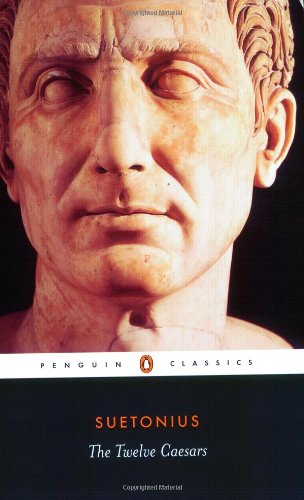
Claudius the God
by Robert Graves
A modern classic of historical fiction written in the form of Claudius's autobiography. Claudius the God is the second part of Robert Graves's two-part account of the life of Tiberius Claudius, "the cripple, the stammerer, the fool of the family" who became Emperor of Rome in spite of himself in 41 A.D. With the same crystalline brilliance that characterizes its classic antecedent, Claudius the God evokes the vitality, splendor, and decadence of Imperial Rome at the beginning of its decline. It is not only a superb re-creation of a colorful moment in history but, through the eyes of the bemused and wry emperor, a compelling and ironic account of human nature as well.